Making a game replaced playing games for me
In middle school I met a game I became a real fan of. It was called Metin2, and as I went from childhood into my teens it won my heart, like it did for millions of others. Over the years I forgot about it, and then it suddenly came back to me.
Last Saturday evening my brother sent me some posts about this game we used to play together when we were young, and an idea formed in my head. I could build a game that carries the parts of it I loved.
Even with AI this wasn’t going to be easy. And of course my goal wasn’t to remake the whole game. I only thought about what it was in that game that made me love it.
What I loved was the hit
What I loved most were the game dynamics. I didn’t care about the story, or about the visuals. The visuals were good enough for their time, though there were better ones back then. What interested me was how the character’s hits felt, and the realistic adrenaline of a fight.
Maybe I felt it that way because a child’s imagination runs so high. But I really loved the feeling of battle when the character fought an enemy or a group of monsters.
In many games I’ve played since, I kept looking for that same feeling. I haven’t played any game for a long time now, on mobile, console or PC. The curiosity that comes with playing and discovering new virtual worlds faded by the time I reached my thirties. I believe that’s the natural course of things and I have no regrets about it. The good years and experiences stayed as good memories.
Anyway, the point was what the game I wanted should be like. I decided it depended on the feeling of hitting that the combat dynamics give, and on graphics that are reasonably good and easy to follow. So that would be my main focus.
A robot with a huge head
I rolled up my sleeves. I knew I couldn’t do this with one prompt, because I have no experience in game development and had no idea where to start.
The best thing about AI is that in exactly this kind of situation it gives you a way forward and something that produces a result right away. So I told it I knew nothing about the subject, and described what kind of dynamics the game I wanted should have.
After working on it for 15 minutes or so, it found a robot-like character with a huge head and managed to give it combat dynamics of the kind I’d like.
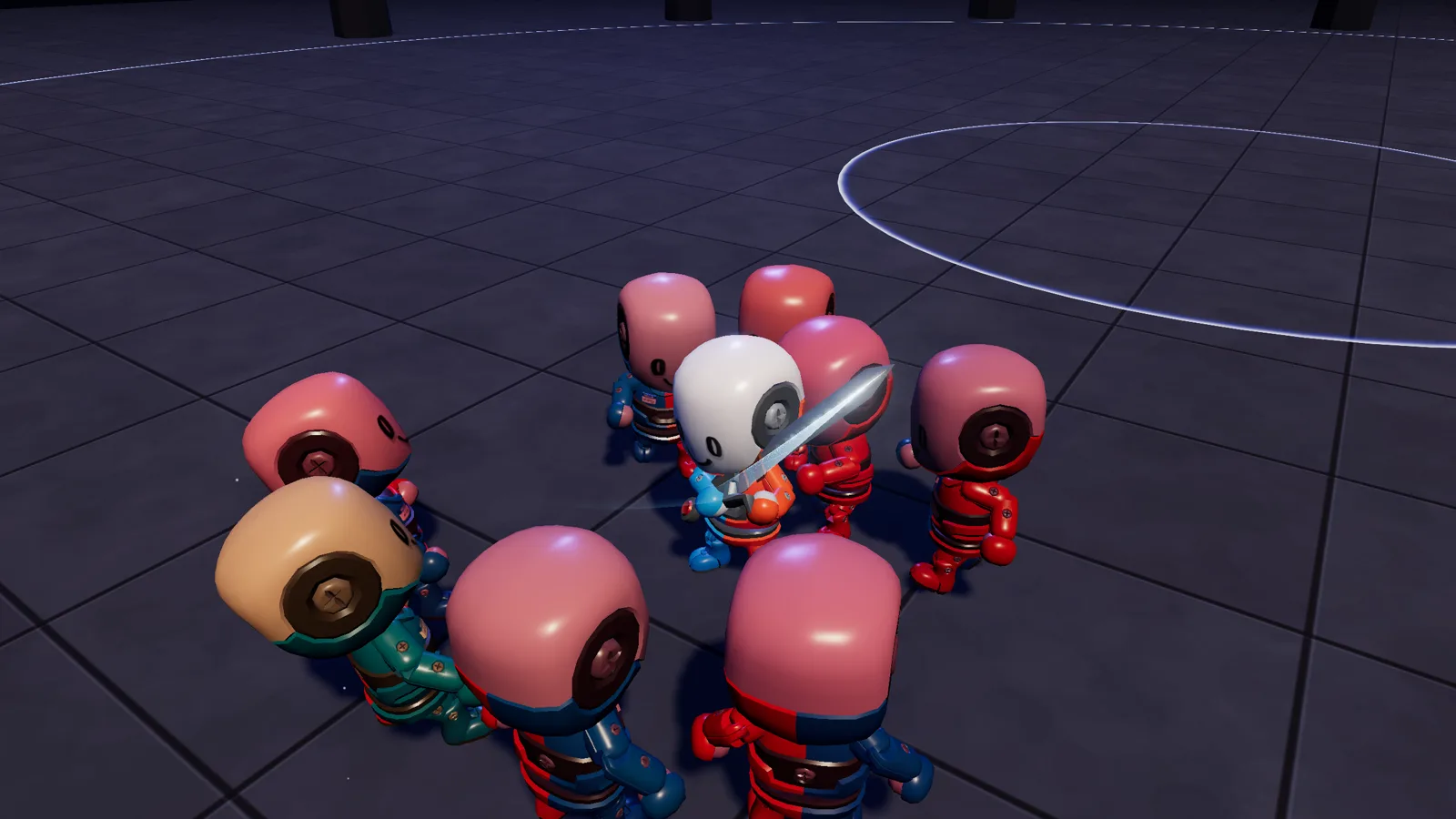
But something was missing. Honestly, playing with a short character that has a huge head and tiny arms was no fun. Then I realized my first judgment had been wrong, and that I didn’t love this kind of game only for its combat dynamics. The reason had to be somewhere deeper.
I decided the character had to be a human. For the acrobatic moves and the attacks to create a real feeling of hitting in my brain, they had to be done by a human like me.
There was one problem. The AI said we had no character design, and suggested I could find the kind of warrior I wanted on certain free platforms. I looked at them and decided Adobe’s Mixamo, with its ready-made animations and character packs, was enough for what I needed.
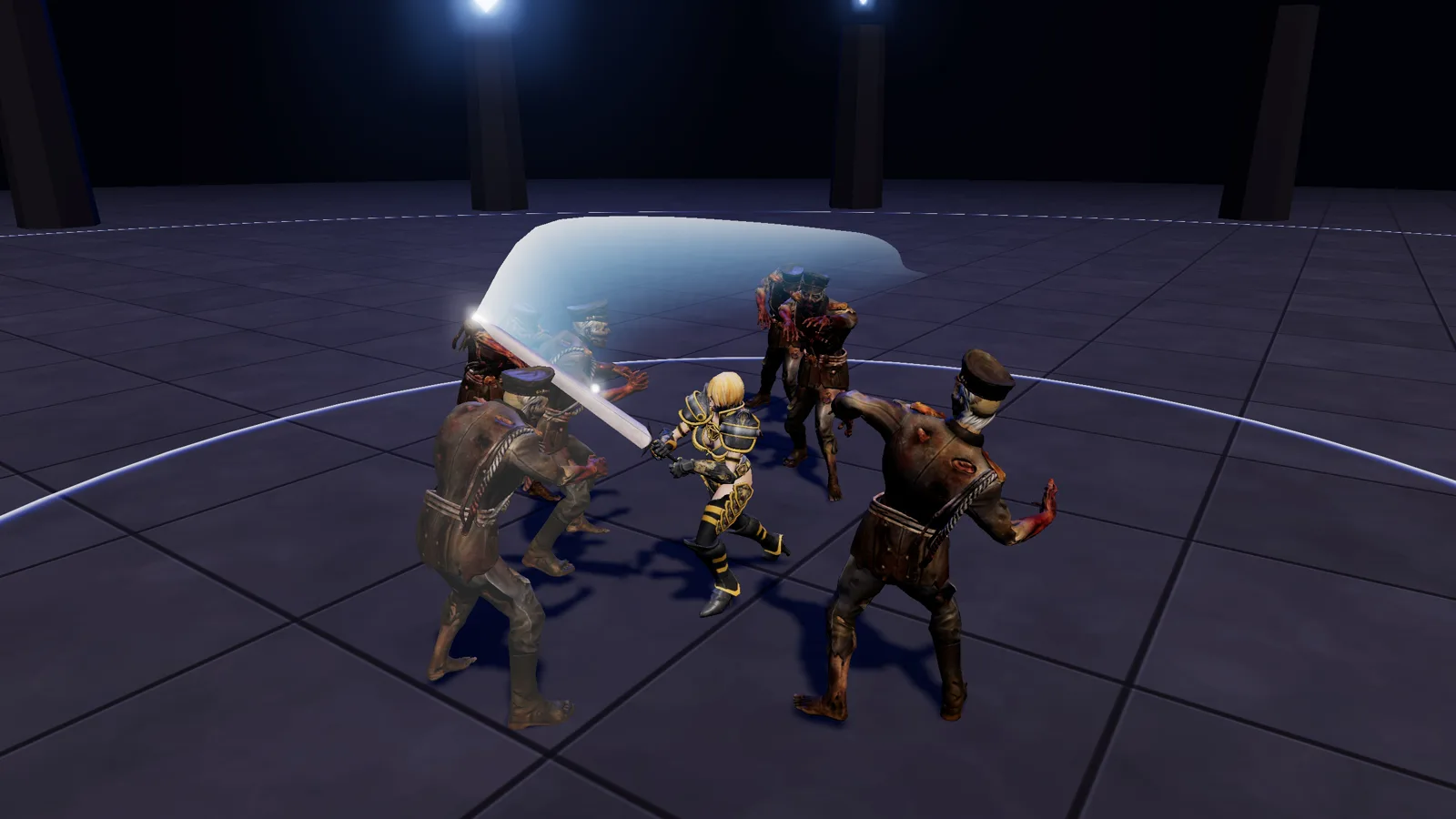
I opened a free account and told the AI to find a character. There weren’t many options for the specific character I had in mind. But there was a warrior woman in battle gear that looks like a bikini. I had no other choice, so I picked her and went on. I asked the AI to download the animations for her and rebuild the existing combat dynamics around this character.
After working for a while the AI produced a result. When I checked it, it was quite controllable and close to what I wanted.
Controls without a soul
Sadly the controls had no soul. Then I noticed that controlling a game character with only combat dynamics, without its voice, animations, effects, enemy characters and things happening around it, isn’t much fun.
I was probably rediscovering the basic laws of game making, like reinventing the wheel. But at least this discovery took only an hour, and that hour was full: code being written, and me testing what was written.
I’m sure that years ago, before AI, I would have given up by this point. Once I saw the labor behind it, I realized that getting imagination onto a screen and turning it into a game takes artistic work and ambition that deserve respect. I already knew it wasn’t easy, but going through it first hand raised my respect for this work.
At the same time, producing something only by telling an AI what I want, without knowing anything about the subject, was very satisfying. If I played a game myself, I don’t think I’d have this much fun in the time I’d spend finishing it.
One day when I have a child, they will be able to do the same things, and knowing that, I can see what a gift this is. I will never get back the imagination I had in the games I played as a child. Who knows what kind of imagination I had back then. If I’d had the chance to build a virtual reality that put it on a screen, one I could walk around in and experience interactively, I can’t even imagine how much joy I would have taken from it.
I have to say today’s children are very lucky in this. The downside looks like they will have less motivation to discover the real world. That can be the subject of another post. For now, let’s continue where we left off.
The sounds didn’t fit the moves
The game now needed sound, VFX, animations and work on the surroundings. Unless all of these work together in harmony, playing really doesn’t give pleasure. The fun and adrenaline I was after could only come once all of them came together flawlessly.
One of the most important steps was finding sounds that fit the free character I found online and the combat dynamics I made up in my head. Then I wondered why I was looking for sounds when I could generate them with free tools. I had used ElevenLabs before for something. I opened my existing account and saw I had some credit. The AI calculated that this credit was enough for something like 150 sounds.
By the way, in the time I haven’t mentioned yet, I had also been adding skills to the character, and I was testing and playing with them.
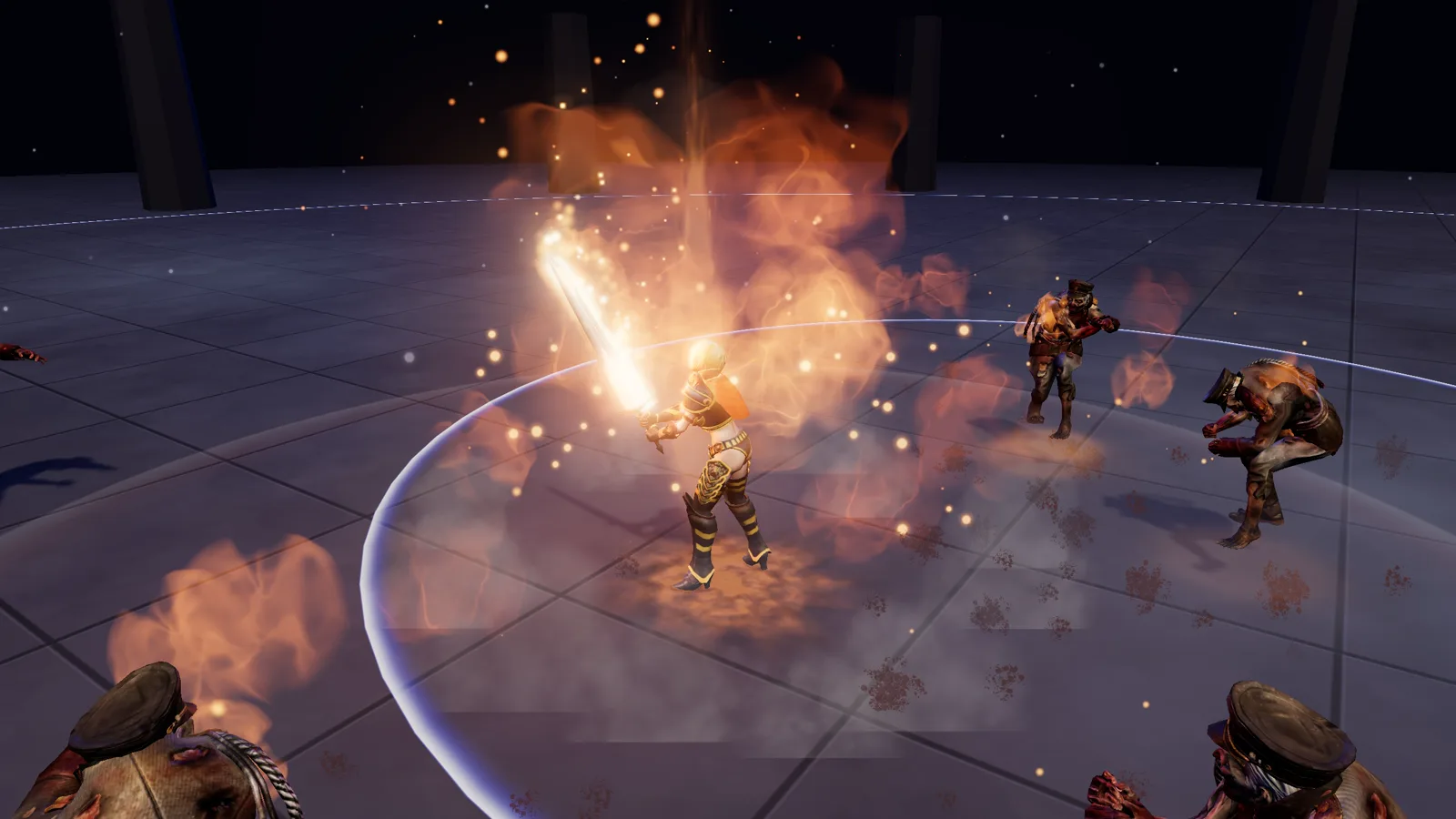
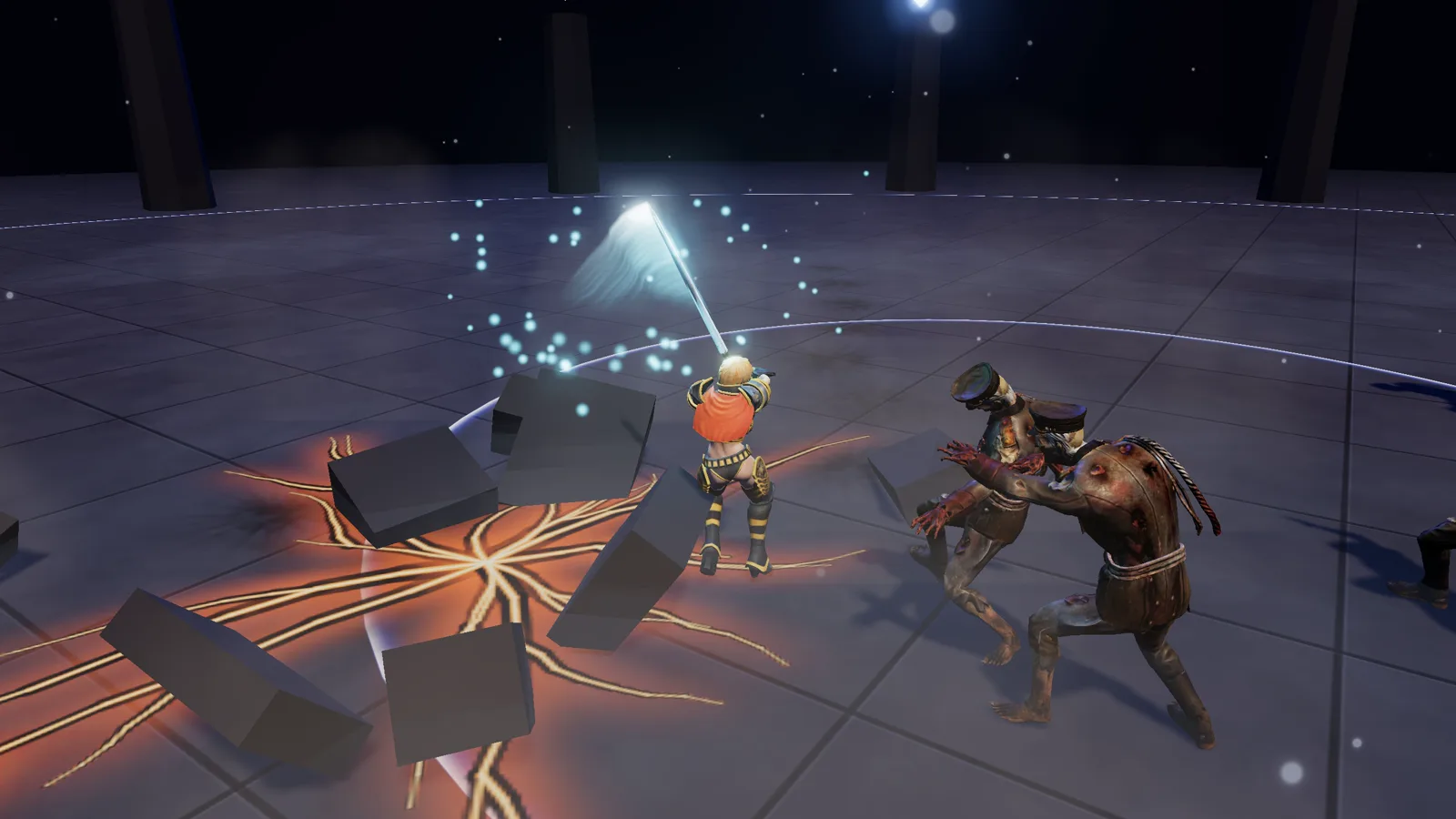
I gave the AI the task of creating sounds for all the character’s animations and connecting them to the character. It worked on it for a while, and when I checked, the results were a disappointment. None of the character’s sounds matched the animations, and there was no trace of the thing called “harmony”.
So I tried to understand what the problem was. I looked at the sounds the AI had generated and noticed that it generated the sound for an animation as one whole piece. Of course that sound couldn’t line up with the animation at the right moments, and a single piece of sound missed the accents a natural voice would have in that move. In some places the voice started loud like a shout, turned into a normal voice, and ended after the animation was already over.
One animation at a time, then all of them
I focused on a single animation and imagined how I would produce a sound for it. I played the animation over and over. Then I wrote a long prompt with everything I found, how I would make this sound if it were me, and how I’d use it on the animation.
The sound that came back followed my instructions, and when I heard it in perfect sync with the animation I knew I had found the right spot.
I moved straight to the next animation and followed similar steps. Then I decided that doing this one by one for more than 50 animations wouldn’t be smart, and that this was a workflow that repeats itself.
So I told the AI to go through all the animations one by one, frame by frame, and work out how the human sounds in the character’s transitions should be produced piece by piece. I also told it not to generate any sound in this first step. It analyzed all of the character’s animations this way and wrote the prompts for how the sounds of each one should be. Then I told it to download all these sounds and apply them to the character.
The result was excellent. I thought it sounded as if it had been made by hand. I’m sure game designers get more accurate and flawless results than this, but I was doing it for my own enjoyment, so I wasn’t expecting perfection. My character felt alive, and with her voice she started turning into something living.
Here are a few of the sounds we generated with ElevenLabs, as they are in the game.
The voice for the five hits of the combo, one after another:
The voice for the leap attack:
The Whirlwind skill, her voice and then the wind:
Right after that I used the same workflow for the monsters in the game and added their animations and sounds.
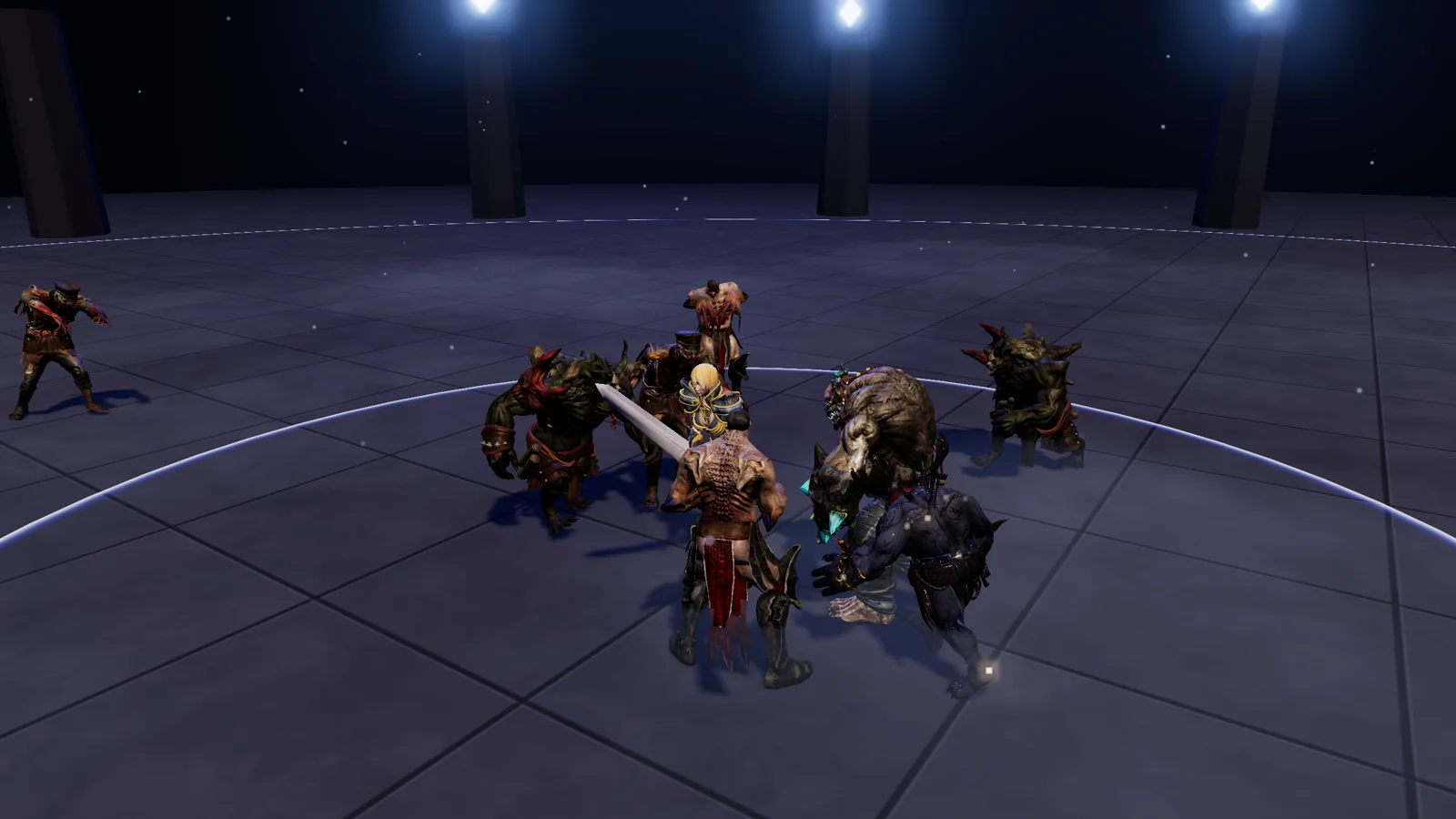
One of the monsters screaming as it appears:
The result is the small game prototype I’m sharing with you here. I have no idea yet what it will turn into. Even seeing this process taught me enough, and it was a good experience. I’ll open it now and then, play it, and fill in what it’s missing. I’ll also share it on a few channels to collect ideas. If it gets interest, I’ll keep developing it. Playing and developing it in my spare time is priceless anyway.
Thousands of games are already being made this way
Building this small prototype made me notice something. In recent posts on X I saw that people have already started building thousands of games with the help of AI. My prototype is only one of them.
When supply rises this much, demand will fall. It’s obvious that using this new opportunity to add one more lookalike to the games that already exist won’t pay back the effort. That goes for me too. I made this game for fun and I expect nothing from it. In my case, making plus playing took the place of playing.
I can’t even imagine the thinking effort it takes to come up with unique game ideas in this crowd. That’s why I think people making games with this new technology will only succeed with different ideas that were never tried before and couldn’t be tried without it.
It doesn’t have to be a game with AI in it. For example, being able to build huge games that are super optimized and only megabytes in size with the help of AI would make a big difference.
Another example is the open world game every player imagined in the past, with AI characters that live and think where today’s only play a role. If those can be made, and they run without an internet connection, we’ll have entered a revolutionary age in games. I believe only developers who already build games with mastery can pull that off, with incredible effort, and when the technology allows it.
Where the prototype is now
I filled in what the prototype was missing, the animations, the sounds, the VFX and so on, as well as I could. As I developed it to my own taste, I added the things I saw missing. I haven’t added an environment or game logic yet, because I think a game whose gameplay isn’t fun won’t be fun however rich its visuals and content are.
Here is its latest state as a video. I built this prototype with two dozen prompts in a few hours, so you can judge it by that.
Seeing what’s possible was very satisfying. Along the way I both played a game and discovered the fine points of making one.